
Should I Own a Filling Station? What Every Potential Owner Needs to Know
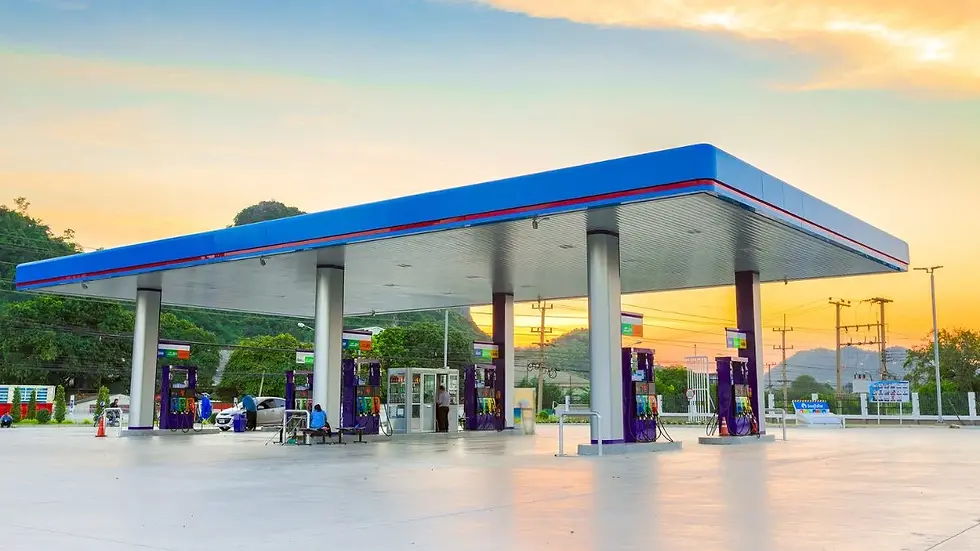
Owning a filling station sounds like a straightforward business:
Find a busy road.
Secure a piece of land.
Build a forecourt.
Put up the branding.
Sell fuel.
South Africans need fuel every day, so surely a filling station in the right location should make money.
After assessing filling station developments and working with landowners looking to enter the sector, I've found that this is exactly where many potential owners get it wrong.
A busy road does not automatically make a good site.
High traffic volumes do not necessarily translate into high fuel sales.
And perhaps most importantly, owning a filling station is not the passive-income investment many first-time owners imagine it to be.
There can absolutely be good opportunities in the South African filling-station market. But before spending serious money, potential owners need to understand what they're actually getting into.
The First Misconception: "I'll Make Money Quickly"
Many first-time filling-station owners are attracted to the business for one obvious reason: money.
They see successful operators owning five, ten or even twenty filling stations and assume the model is simple.
Build one. Make money. Build another.
What they don't see is the business infrastructure sitting behind those portfolios.
Operators with multiple successful stations aren't simply collecting passive income from a collection of petrol pumps. They've built an operating business around those assets.
There are staff, stock, security, compliance, convenience retail, suppliers, cash flow, maintenance and an enormous amount of operational management involved.
I've known people who've built substantial portfolios, and I've known others who've eventually sold out of the sector.
My first warning to anyone looking for passive income is therefore very simple:
A filling station is not passive income.
If that's what you're looking for, there are probably better investments.
"But My Land Is on a Busy Road"
This is probably the most common starting point we encounter.
Someone owns a vacant property on a busy road and thinks:
"This would be perfect for a filling station."
Sometimes they're right.
Sometimes they're very wrong.
When I physically inspect a potential filling-station site, I'm initially looking at surprisingly basic things.
Where is the property?
Is it on a corner?
What kind of road is it on?
How busy is that road?
Is the site flat or heavily sloped?
How is the property orientated towards the road?
Is there sufficient usable space?
And critically:
How do vehicles actually get into it?
These observations don't replace a proper feasibility study. But they can tell you very quickly whether it's worth spending more money investigating the opportunity.
30,000 Cars Passing Your Site Doesn't Mean 30,000 Potential Customers
Traffic counts are important.
But raw traffic volume can be extremely misleading.
Imagine 30,000 vehicles pass your property every day.
That sounds fantastic.
But what happens if half of those vehicles are travelling on the opposite side of the road and can't conveniently reach your filling station?
There may be a median.
There may be an island.
There may be restrictions on turning movements.
Or the road may simply be so busy that crossing opposing traffic is impractical.
Suddenly your theoretical market is significantly smaller.
This is why traffic past a site and accessible traffic are not the same thing.
Access is one of the most overlooked aspects of filling-station development.
A site can look excellent on Google Maps and still perform poorly once actual vehicle movement is understood.
A Site Can Look Almost Perfect and Still Fail
We experienced exactly this on a proposed filling station in a Johannesburg township.
On paper, the site looked extremely promising.
It was positioned on a main road close to a highway, with substantial traffic moving between the township and the highway.
It was a corner property.
It was relatively flat.
Access was good.
The site was approximately the right size for the smaller forecourt being considered.
There was an existing competitor around 1.5 kilometres away, but that alone didn't concern us. We've seen markets where even the same brand operates stations relatively close together because sufficient demand exists.
The landowner was so convinced of the site's potential that substantial work had already been done.
Environmental processes had been undertaken.
Rezoning had been pursued.
Then came the problem.
The orientation of the property towards the main road was wrong.
Although the land area itself could accommodate a filling station, its long, narrow orientation relative to the road reduced the exposure that the fuel brands wanted from the site.
After all the apparent positives and after money had already been spent the opportunity didn't proceed as expected.
That's an expensive lesson:
Don't confuse a piece of land that can physically accommodate a filling station with a commercially viable filling-station site.
We've Also Seen the Complete Opposite
Another site we assessed in North West initially concerned us.
There was a mall approximately a kilometre away.
A taxi rank was nearby.
There was already another filling station close to the taxi rank.
Access wasn't ideal.
And at approximately 1.5 hectares, the property was significantly larger than what was required for the filling-station component.
Our initial view wasn't particularly optimistic.
But as we investigated further, the picture changed.
The nearby competing filling station wasn't operating optimally.
The nearby mall was a proper shopping centre rather than a direct substitute for quick convenience retail.
Traffic investigations produced encouraging results.
Access from the opposing traffic flow could potentially be created, although at additional development cost.
Most importantly, there was genuine interest in the site from fuel brands.
A property we initially thought could struggle turned out to have considerably more potential than expected.
I've seen enough of these situations to be very cautious about declaring a filling-station site "good" or "bad" based purely on appearance.
You're Not Just Developing a Place to Sell Fuel
This is perhaps the biggest shift potential owners need to understand.
A modern filling station is increasingly a fuel, convenience and destination business.
Fuel gets motorists onto the property.
But the wider retail offering can be what makes the site compelling.
The convenience store is therefore critical.
Depending on the market and brand arrangements, that could mean a recognised grocery or convenience offering, food, coffee or another retail proposition appropriate to the area.
We've also seen filling stations create completely different reasons for customers to visit:
Drive-through restaurants.
Tyre fitment businesses.
Car washes.
Boutique Food outlets.
Other complementary convenience services.
The principle is more important than the particular tenant.
Why should somebody choose your filling station instead of the one two kilometres away?
If the only answer is "because we also sell petrol", you don't have much differentiation.
Every competitor sells petrol.
One Operator Gave Customers a Completely Different Reason to Stop
One example has always stuck with me.
A filling station on a busy route had lost much of its relevance over time. The location may have worked extremely well decades earlier, but changing traffic patterns and competition meant motorists had less reason to stop there.
An experienced entrepreneur with a portfolio of filling stations acquired it.
Instead of accepting the existing model, he created a reason to visit.
He introduced a free car wash for vehicles visiting the forecourt.
It was simple, but it differentiated the station.
From my discussions with him, the effect on turnover was substantial.
That's the mindset I think prospective filling-station owners need.
Don't only ask:
"How many cars pass my property?"
Ask:
"Why would those motorists choose to stop at my property?"
The Convenience Offering Must Match the Market
Differentiation also needs to make sense for the surrounding customer.
A premium convenience-food offering may perform extremely well in one suburb and completely miss the market somewhere else.
A different grocery brand or food offering may be far better suited to another area.
That's why copying a successful filling station from another suburb doesn't necessarily work.
The surrounding demographics, traffic patterns, competing retail, commuter behaviour and local demand all matter.
Your filling station needs to respond to its market, not somebody else's.
The Most Expensive Mistake Can Happen Before You've Even Proved the Site
One of the biggest mistakes we see is developers spending money in the wrong order.
A landowner approaches a fuel company.
They're asked whether they own the property.
Yes.
They're asked for the zoning.
The property isn't zoned appropriately for the intended filling-station use.
So the owner starts rezoning.
That can become an expensive and time-consuming process.
But there's a question that should have been answered first:
Should there be a filling station on this property at all?
This is why we've changed the way we approach these opportunities.
At 4MPM, we've taken many of the initial factors we assess on filling-station sites and incorporated them into an online automated filling-station site assessment.
It considers factors such as the site's physical characteristics, geo-location, access, road context, competition and other commercial indicators to provide an initial screening of the opportunity.
It isn't intended to replace a professional feasibility study.
It's intended to answer the earlier and cheaper question:
"Is there enough here to justify investigating further?"
If the answer is clearly no, we'd rather establish that before a landowner starts spending substantial money on consultants and statutory processes.
What Happens If the Initial Assessment Looks Positive?
Then we progressively increase the level of investigation.
Our process generally moves from initial screening into a more detailed desktop assessment.
At this stage, relevant consultants can interrogate the site further, stress-test assumptions and investigate market appetite, including approaching fuel brands where appropriate.
If the opportunity continues to make sense, the project can move into proper feasibility.
Depending on the project, this may include specialist market work, traffic counts, traffic-impact investigations, concept planning, development costing and other technical investigations.
Only once we're comfortable that the underlying opportunity makes sense do we want the developer committing serious capital to the statutory and detailed development process.
That can then involve town planning, environmental processes, geotechnical investigations, surveying, licensing and approvals, detailed professional design, funding arrangements and ultimately construction.
The exact sequence will differ between projects and municipalities.
The important principle is:
Spend a little money proving the big questions before spending a lot of money answering the smaller ones.
Development Cost Is Another Area Owners Underestimate
A filling station isn't simply a retail building with pumps outside it.
The development contains highly specialised infrastructure.
Underground fuel tanks.
Fuel systems.
Forecourt infrastructure.
Environmental requirements.
Specialist contractors.
Brand requirements.
Road and access works.
Electrical infrastructure.
Convenience-retail fit-out.
Professional and statutory requirements.
All of this affects development cost.
And then there are the things outside the filling station itself.
We've seen municipal infrastructure have a major impact on the viability of a project.
A commercially attractive property can suddenly become considerably less attractive if providing adequate electricity or other infrastructure requires substantial upgrades.
We've encountered projects in areas where connecting or upgrading infrastructure created serious additional cost and complexity.
This is why development feasibility cannot stop at projected fuel volumes.
You need to understand what it will actually cost to make that property operational.
Should You Own the Land?
My preference is very clear.
If possible, own the land and the filling station.
There are many different structures in the fuel-retail industry, and the commercial terms vary considerably.
Some arrangements involve fuel brands funding significant parts of development and entering into long-term lease or operating structures.
Others involve the developer funding and owning substantially more of the asset.
There isn't one structure that's correct for every project.
But owning a genuinely good piece of land puts the developer in a very different negotiating position.
It also means you're not only building a fuel business.
You're creating value in the underlying property.
This becomes particularly interesting where the filling station is only one component of a larger development and is being used to generate traffic for surrounding retail or commercial uses.
In that situation, the filling station may be part of a much bigger property strategy.
Sometimes the Best Filling Station Decision Is Not to Build One
This is something developers don't always want to hear.
We've looked at properties where the owner has spent years pursuing a filling station because that's what they originally imagined for the site.
But development shouldn't work that way.
The objective isn't to prove your original idea correct.
The objective is to establish the highest and best use of the land.
We're currently involved with a property in Auckland Park where a filling station had been considered for years.
Our view was to step back and ask a different question:
What else could this land become?
The landowner ultimately pursued another development direction.
Walking away from a filling station doesn't necessarily mean the property failed.
It may mean you've finally identified a better development.
So, Is Owning a Filling Station Still a Good Business in South Africa?
I believe it can be.
South Africa remains heavily dependent on liquid fuels, and filling stations remain an important part of our transport and retail infrastructure.
There is also continuing investment and consolidation in the sector. In 2026, for example, ADNOC Distribution of the UAE agreed to acquire Shell's interest in its South African downstream business, including a substantial network of fuel and convenience sites, subject to the relevant approvals.
That doesn't mean every filling station is a good investment.
Far from it.
The opportunity needs to make sense at site level.
The land needs to work.
Access needs to work.
Traffic needs to be accessible.
Development costs need to work.
The surrounding market needs to work.
The convenience offering needs to work.
Competition needs to be understood.
And ultimately, you need to give motorists a reason to choose you.
If you're looking at a vacant property on a busy road and thinking:
"South Africans need fuel. This must be a gold mine."
I'd suggest you don't spend serious money yet.
First establish whether the opportunity actually exists.
Because after assessing enough of these sites, one thing has become very clear to me:
The best-looking filling-station site isn't always the best opportunity—and sometimes the best development opportunity isn't a filling station at all.


Comments